
Simple locates, $200–$400
Short runs, decent access, leak confirmed and marked without drama.
Somewhere between the meter and your taps, water is escaping, you can see it on the bill even when you cannot see it anywhere else. We pinpoint concealed leaks across Balmain with instruments instead of crowbars, so the repair opens one small hole in exactly the right place.
A concealed leak cannot keep all three of its secrets. It makes a sound, pressurised water escaping sings in frequencies acoustic gear tracks along the pipe. It changes temperature, the wet path, or the warm plume of a leaking hot line, paints itself across thermal imaging. And it loses pressure, isolate the pipework section by section against a gauge, and the guilty run confesses while the innocent ones hold steady.
One signal narrows it; three signals convict. Where the readings intersect we mark the surface, and that mark is routinely metres from where instinct says to dig, especially under Balmain’s renovated homes, where pipe runs wander in ways no drawing ever recorded. Every centimetre of accuracy is a tile that stays on the floor.


Mature figs and street trees along the peninsula push roots into aged clay lines, a leading cause of the blockages we clear here.
Close to the water the ground is frequently wet regardless of any plumbing fault, which removes the most obvious diagnostic anybody has. Damp subfloor, moisture in the slab edge and standing water in a trench prove nothing here.
So detection near the water leans on isolation and the meter rather than observation, and on tracer gas where a leak is genuinely hidden by ambient groundwater.
Balmain’s original 19th-century sewer pipes are among Sydney’s oldest, and their cracked, sagging joints trap debris and block repeatedly.
Lath and plaster, pressed metal ceilings, original tiling and heritage listings all raise the cost of being wrong. In a period home the value of precise location is not the plumbing saved, it is the finishes not destroyed.
So we locate to the smallest area the equipment will support, and where a listing is in play we document what we propose to open before anything is touched.
Sharp slopes down to Mort Bay and tight rear-lane access affect drainage flow and make careful, well-equipped clearing essential.
Sloping blocks are full of retaining structures, and pipework often runs behind or beneath them because there was nowhere else to put it. A leak in that position saturates backfill, and saturated backfill is what makes retaining walls move.
Water showing at the base of a wall is worth treating as urgent even when the volume looks trivial. The plumbing repair is small compared with what the wall costs.
Older homes are a record of everyone who has worked on them. Original runs, a post-war bathroom teed in somewhere unexpected, a laundry added in the sixties, and nothing documented.
That is why detection on a heritage-era property starts by establishing where the pipes actually go. Tracing the layout is half the job and it is the half that prevents opening the wrong wall.
Balmain occupies a hilly harbour peninsula in Sydney’s Inner West (postcode 2041), packed with 19th-century workers’ cottages and terraces and bordering Rozelle, Birchgrove and Lilyfield. Its old sandstone streets and ageing clay drains make it one of the trickiest spots in Sydney for blockages, and we thrive here.
On sloping ground, water leaving a pipe travels along whatever path is easiest until something stops it. By the time it appears it can be metres from the failure, several properties away, and always further down.
So the damp patch is a starting point, not a destination. We work uphill from it with correlation equipment rather than digging where the evidence happens to be visible.
Older houses have rising damp, failed flashings, blocked subfloor vents and perished mortar, all of which produce symptoms that look exactly like a leak.
Establishing which one you have is worth doing before any pipe is repaired. A moisture profile that peaks at floor level and falls with height points at rising damp; one that peaks at a fixture or a pipe run points at plumbing.
A concealed leak is most often discovered by a water bill rather than by water. By then it has usually been running a full quarter, which is both the bad news and a useful clue about size.
Compare the last three bills rather than two. A single high quarter can be a garden or a visitor; a steady climb with no change in the household is a leak until something proves otherwise.
Short runs, decent access, leak confirmed and marked without drama.
First hour with the full instrument kit, acoustic, thermal, pressure, on a typical concealed leak.
Beyond the first hour: extended runs, tight access, multiple suspects to eliminate.
Deep slab lines and multi-storey mysteries at the top of Sydney's range.
Priced off exactly what the detection proved, fixed before it starts, same crew, same visit, no second call-out.
The comparison to hold onto: exploratory demolition costs more than detection before its first guess is even wrong. Figures here are indicative of the 2026 Sydney market rather than a quote from us, you get your own number as a fixed price before any work starts.

The meter test done properly, plus your bills. If the evidence says there is no supply leak to find, you hear exactly that, free of a detection invoice.
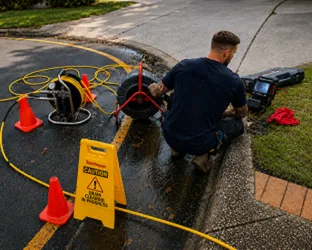
Isolating pipework section by section against a pressure gauge, hot versus cold, line by line, convicts one run and acquits the rest.

Acoustic tracking and thermal imaging walk the guilty run until the signals stack. The X on the floor is accurate to centimetres.

Access opens exactly at the mark; the failed section is repaired and pressure-tested. If the run's condition argues for a reroute instead, both numbers land first.
Then it is real, running, and billing you daily. Detection this week beats discovery through a ruined floor next month.
Non-invasive detection, evidence before quotes, and one crew for the find and the fix.

Leave your details and our local Balmain team will call you back fast.