
Common repairs, $150–$600
Elements, thermostats, thermocouples, relief valves: the parts that actually fail, fixed in a single visit. Most no-hot-water calls land here.
Cold water at 6am feels terminal, but the autopsy usually finds a $40 part, not a dead system. We test before we talk replacements, carry the common failures on the van, and put Balmain households back under hot showers the same day, saving the new-system quote for tanks that have honestly earned one.
Most of the no-hot-water calls we take in Balmain end in a repair, not a skip bin. Electric systems lose elements and thermostats; gas systems lose thermocouples and pilot assemblies; continuous-flow units throw error codes that mean a sensor or a flow problem, not a dead unit. Those are parts, they are stocked on the van, and the fix is measured in hours.
The industry default is the opposite, quote a shiny new system to anyone whose water went cold, because a replacement is worth ten times a thermostat. We diagnose first. A five-year-old tank with a failed element deserves an element. What it does not deserve is a $2,000 replacement because someone could not be bothered testing a $40 part.

Capacity complaints are usually a sizing problem rather than a fault: two showers at once, or a bath while the dishwasher runs, exceeding what the unit was specified to deliver. Worth diagnosing before replacing anything.
Units mounted outside in a humid, water-adjacent setting corrode at the casing and the fittings well before the cylinder itself gives up. The failure looks sudden and has usually been visible for a year to anyone who looked.
A five-minute look at the top fittings and the base of the casing once a year is the entire maintenance requirement, and it reliably converts an emergency into a planned replacement.
Weak hot water in an older home is often diagnosed as a failing unit when the actual cause is the pipe leading to it, decades of internal corrosion narrowing the bore.
The ABS 2021 Census puts 39.9% of Balmain dwellings in the semi-detached, row or terrace category. Attached housing is why hot water here sits in light wells, narrow side passages and rear courtyards rather than open yards.
The test is simple: if the cold is strong and the hot is weak, the fault is on the hot side, and if the hot has declined gradually over years rather than suddenly, it is far more likely to be pipe than heater. Worth establishing before buying a new system.
Properties near the water are more likely to sit unused for stretches, and a hot water system does not enjoy that. Stagnant water accelerates anode consumption, and a unit that has sat for months frequently fails within days of being brought back into use.
On an attached house the position decides the system. Clearance to windows and boundaries, flue routing on a shared wall, and getting a replacement cylinder through the house all constrain the job before the appliance is chosen.
If a property is left for a season, isolating and draining the unit is worth the twenty minutes. Bringing it back slowly, with the tank refilled before power or gas is restored, avoids the most common restart failure.
No hot water is listed among urgent repairs under NSW residential tenancy law. The landlord or agent must arrange it promptly, and your first call is to them.
If they cannot be reached, tenants can arrange urgent repairs up to a legislated limit and seek reimbursement. Keep the invoice and a record of your attempts to contact them, we itemise ours with times so it holds up.
Inside every storage cylinder is a sacrificial anode that corrodes so the steel does not. When it is consumed, the tank starts consuming itself, and that is the point of no return.
Replacing an anode costs a fraction of replacing a tank and roughly doubles its service life. Almost nobody does it, because almost nobody is told it exists, which is why it is here rather than in the fine print.
A tank that no longer lasts the morning is usually not broken. Sediment builds in the base and insulates the element, so less of the cylinder is genuinely being heated, and the element works harder for a smaller result.
Flushing the tank restores much of it. If flushing does not, the household has grown or the habits have changed, and the honest answer is that the tank is now undersized rather than faulty.
Elements, thermostats, thermocouples, relief valves: the parts that actually fail, fixed in a single visit. Most no-hot-water calls land here.
Gas valves, control boards on continuous-flow units, and bigger jobs on systems still worth the spend.
Like-for-like replacement when the tank is done. Gas storage runs $1,200–$2,200 installed.
Endless hot water, no tank to rust, and it frees the space the cylinder occupied.
After rebates. Costs the least to run of the lot, worth the numbers conversation on any replacement, not just the green one.
Repair or replace, you get both numbers side by side and the price is fixed before work starts. Figures here are indicative of the 2026 Sydney market rather than a quote from us, you get your own number as a fixed price before any work starts.

System type, age, and what it is doing: that is usually enough to bring the likely part on the van and tell you honestly whether today ends in hot water.
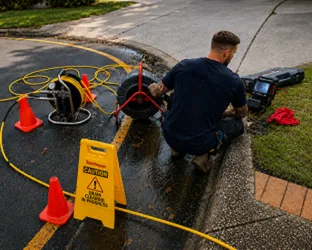
Elements get metered, thermostats tested, gas components checked in sequence. The diagnosis is what the meter says, not what sells best.
A repairable fault gets repaired on the spot. A dying tank gets you the repair price and the replacement price side by side, and the call stays yours.
If it is a replacement: delivered, installed to spec: tempering valve, relief drain, compliant connections: old unit carted away, hot water the same day in most cases.
Early calls usually shower hot the same night. Tell us the system on the phone and the likely part rides out on the van.
Same-day repairs, straight replace-versus-repair numbers, and a fixed price before work starts.

Leave your details and our local Balmain team will call you back fast.